ELECTRONICS & COMMUNICATION ENGINEERING
To become a leading regional and state level institution in engineering education by fostering innovation, sustainability and inclusivity while empowering rural students with technical excellence, entrepreneurial skills and ethical values to contribute to societal development and the advancement of sustainable technologies in a rapidly evolving world.
Mission of the Institution:- To provide quality technical education through a practical, industry-aligned curriculum, equipping students with the skills and knowledge to excel in engineering and related fields.
- To promote sustainability and social responsibility by integrating environmental awareness and ethical practices into education.
- To encourage entrepreneurship and leadership by developing the entrepreneurial mindset and leadership skills needed to address real-world challenges.
- To strengthen industry and community connections through partnerships, internships and collaborative projects that enhance employability and community impact.
To nurture industry-ready professionals in Electronics and Communication Engineering with a robust foundation of technical expertise, practical experience, and ethical values, empowering them to make meaningful contributions to society.
Mission of the Department:- To offer a curriculum that integrates theoretical knowledge with hands-on experience, equipping students with the industry specific skills necessary for professional success.
- To develop a learning environment that promotes innovation, entrepreneurship, leadership qualities and ethical conduct, helping students to apply their knowledge for the betterment of society.
- To encourage collaboration with all stakeholders, fostering contributions towards the growth and sustainability of society and the environment.
- Students will acquire a strong foundation in core principles of electronics and communication engineering, complemented by hands-on experience to solve real-world industry challenges.
- Students will show leadership and entrepreneurial skills, driven by innovation and ethical values. They contribute to technological progress while promoting social responsibility and environmental sustainability.
- Students will actively engage in lifelong learning and continuous professional development to adapt evolving technologies and contributing to the collective growth of the engineering profession.
- An ability to understand the concepts of basic Electronics & Communication Engineering and to apply them to various areas like Signal Processing, VLSI, Embedded Systems, Communication Systems, Digital & Analog Devices, etc.
- An ability to solve complex Electronics and Communication Engineering problems using latest hardware and software tools along with analytical skills to arrive cost effective and appropriate solutions.
- Social and environmental awareness along with ethical responsibility to build a successful career in Electronics and Communication Engineering and sustain passion for real-world applications using optimal resources as an entrepreneur.
- Basic and Discipline Specific Knowledge: Apply knowledge of mathematics, science and engineering fundamentals and engineering specialization to solve engineering problems.
- Problem Analysis: Identify and analyse well-defined engineering problems using standard methods.
- Design/Development of Solutions: Design solutions for well-defined technical problems and assist with the design of systems, components or processes to meet specified needs.
- Engineering Tools, Experimentation and Testing: Apply modern engineering tools and appropriate techniques to conduct tests and measurements.
- Engineering Practices for Society, Sustainability and Environment: Apply appropriate technology considering society, sustainability, environment and ethical practices.
- Project Management: Use engineering management principles individually or as a team member/leader to manage projects and communicate engineering activities effectively.
- Life-long Learning: Ability to analyse individual needs and continuously update knowledge in the context of technological changes.
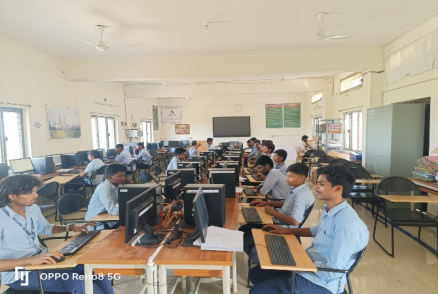
DECE LABS & CLASS ROOMS FACILITY
VIEW DECE LABS & CLASS ROOMS FACILITY Key List AY 2025–26LIST OF PRAGATI SCHOLARSHIP HOLDERS IN THE ECE DEPARTMENT
VIEW PRAGATI SCHOLARSHIP HOLDERSECE Faculty Profiles



.png)
.png)
.png)
.png)
Our Events
Dec 5th & 6th Techfest 2024
GOVT. POLYTECHNIC TADIPATRI
TECHFEST 2024
December 5th and 6th at GPT, Ananthapuram
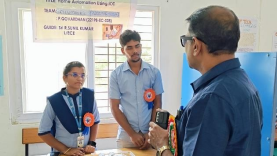
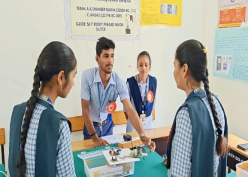
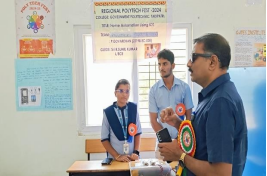
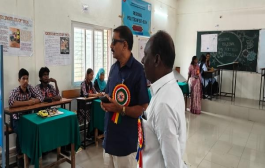
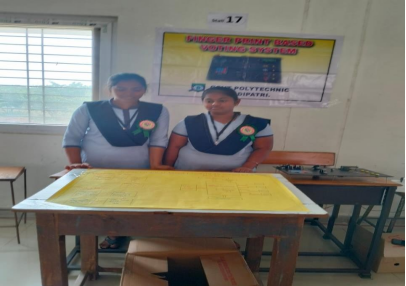
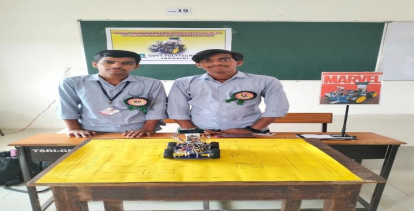
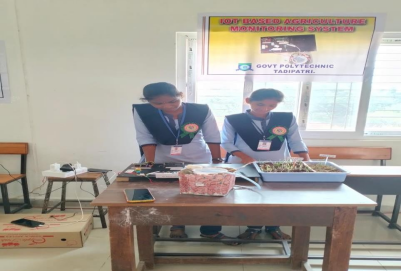
Government Polytechnic, Tadipatri organized a TechFest to encourage technical creativity, innovation, and practical learning among students. The event provided a platform for students to showcase their technical skills, ideas, and project innovations through various activities such as technical presentations, project demonstrations, quizzes, and competitions.
Students from different departments actively participated in the event and presented innovative ideas related to engineering and technology. The TechFest helped students enhance their technical knowledge, teamwork, problem-solving abilities, and confidence.
Faculty members guided the students throughout the event and appreciated their enthusiasm and creativity. The program successfully created a vibrant learning environment and motivated students to explore new technologies and innovative solutions.
.jpeg)

Ece-NSS programme


